

Technology
Digital Education Platforms in Indian Schools: The Future of Learning in 2026
Discover how Digital Education Platforms and School ERP software help Indian schools manage admissions, fees, attendance, exams, communication, and academic operations efficiently in 2026.
28 May, 2026
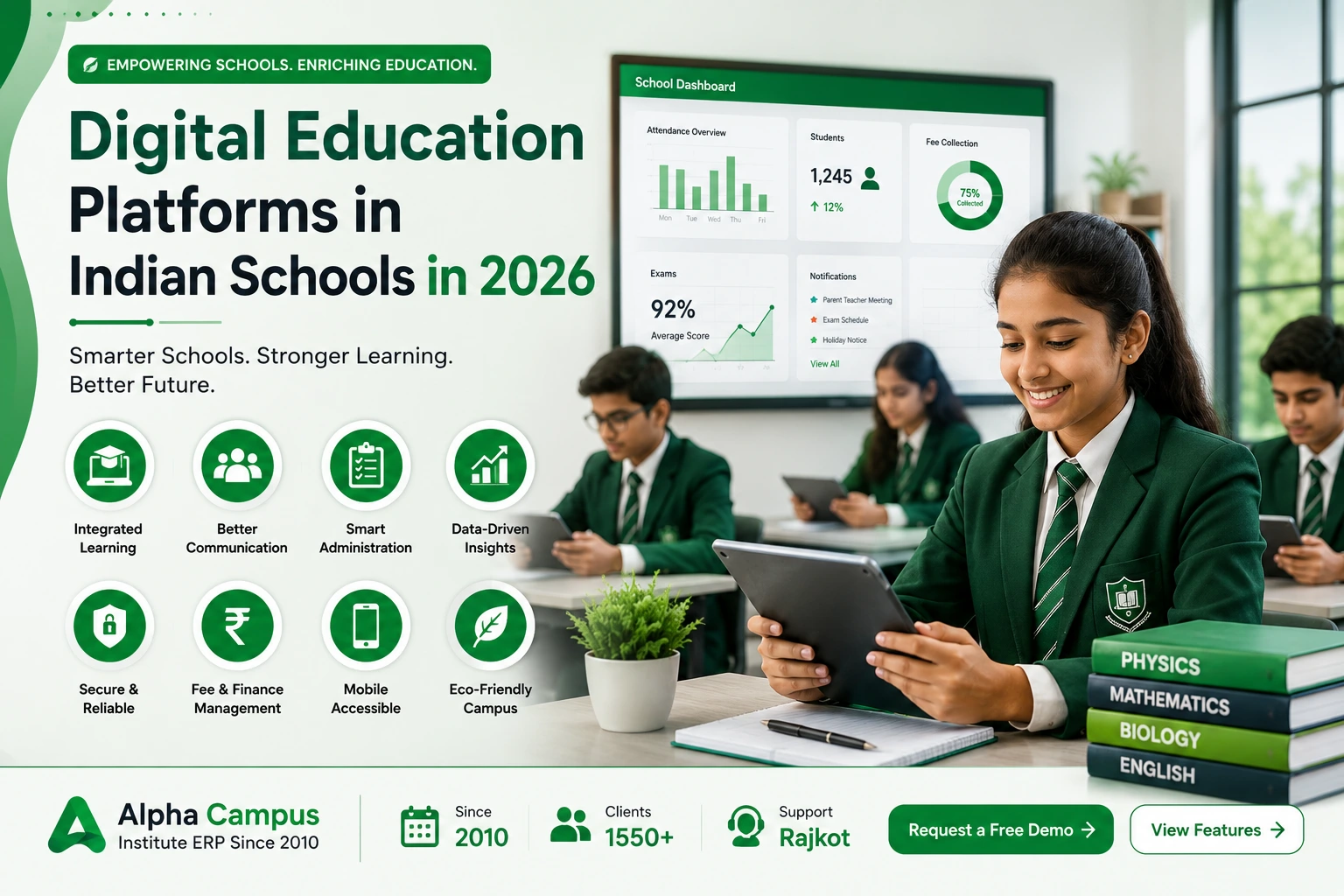
Education in India is rapidly transforming through technology. Schools are adopting Digital Education Platforms and School ERP systems to simplify administration, improve communication, and create better learning experiences for students.
Why Schools Need Digital Education Platforms
Managing admissions, attendance, fees, examinations, communication, and academic records manually can be time-consuming. A School ERP helps automate these tasks and allows schools to focus more on education and student development.
Key Benefits of School ERP Software
1. Smart Administration
Automate admissions, attendance, fee collection, report cards, and daily school operations with a single platform.
2. Better Parent Communication
Parents can instantly access attendance, homework, exam results, notices, and school updates through mobile applications.
3. Improved Student Performance
Teachers can monitor academic progress, identify learning gaps, and provide personalized support to students.
4. Online Fee Management
Enable secure online fee payments, automatic receipts, reminders, and complete fee tracking.
5. Real-Time Reports & Analytics
School administrators can make informed decisions using detailed reports and performance dashboards.
Essential Features of a Modern School ERP
- Student Information Management
- Admission Management
- Attendance Tracking
- Fee Collection System
- Examination & Report Cards
- Homework & Assignments
- Parent Mobile App
- Staff Management
- Library Management
- Transport Management
- Timetable Management
- Reports & Analytics
Why Digital Education Platforms Matter in 2026
Today's parents expect transparency and instant access to information. Schools need technology that simplifies operations while improving communication and academic management.
A modern School ERP helps educational institutions save time, reduce paperwork, improve efficiency, and deliver a better experience for students, teachers, and parents.
Conclusion
Explore Alpha Campus modules, INR pricing, or request a free demo with our Rajkot team.
Explore all modules, pricing in INR, or request a demo with our Rajkot team.
Request a free demo
See fees, attendance, exams, and parent apps on Alpha Campus Online ERP.
Since
2010
Clients
1550+
Support
Rajkot
Frequently Asked Questions
Q1: What is a Digital Education Platform, and how does it differ from a School ERP?
A1: A Digital Education Platform is a broad term encompassing all technological tools used for teaching and learning. A School ERP (Enterprise Resource Planning) is a specific type of digital platform that integrates and manages all administrative, academic, and operational functions of a school, acting as the backbone for various digital education initiatives.
Q2: How do School ERPs benefit parents in India?
A2: School ERPs offer numerous benefits to parents, including real-time access to their child's academic progress, attendance records, homework assignments, and grades. They also facilitate easy communication with teachers, online fee payments, and timely notifications about school events and announcements, enhancing transparency and engagement.
Q3: Is a School ERP system suitable for all types of schools in India?
A3: Yes, modern School ERP systems are highly customizable and scalable, making them suitable for a wide range of educational institutions, from small primary schools to large university campuses, and across various boards like CBSE, ICSE, and state boards throughout India.
Q4: What are the key considerations for Indian schools when choosing a Digital Education Platform?
A4: Key considerations include the platform's scalability, ease of use, security features, compliance with Indian educational standards, comprehensive module offerings (e.g., admissions, LMS, finance), customer support, and the ability to integrate with existing systems.
Q5: How can Digital Education Platforms help schools in top Indian cities prepare students for future careers?
A5: By providing access to digital learning resources, fostering digital literacy, enabling personalized learning paths, and streamlining administrative tasks, these platforms allow educators to focus on developing critical thinking, problem-solving, and collaboration skills – all essential for future career success in a rapidly evolving global economy.